
63
Almost every traveler who invests in compression packing cubes does so with the hope of a small miracle: fitting weeks of clothing into an overhead carry-on without wrestling the suitcase shut. The reality, however, often unfolds on the bedroom floor the night before departure. Clothes get jammed into the fabric pouch, the outer zipper is wrenched around strained corners, and the result is an awkward, bowling-ball-shaped mound that refuses to sit flat and threatens to burst at the seams.
Instead of an organized, modular packing system, you end up with dense fabric boulders that waste valuable space in the corners of your luggage.
Compression packing cubes are exceptionally effective tools, but they are not vacuum sealers. They require a deliberate method that accounts for fabric density, folding geometry, and zipper physics. When approached with the right technique, you can compress a versatile, multi-week wardrobe into a compact carry-on while protecting your clothes from deep wrinkles and saving your luggage zippers from early failure.
Understand What Compression Cubes Actually Do
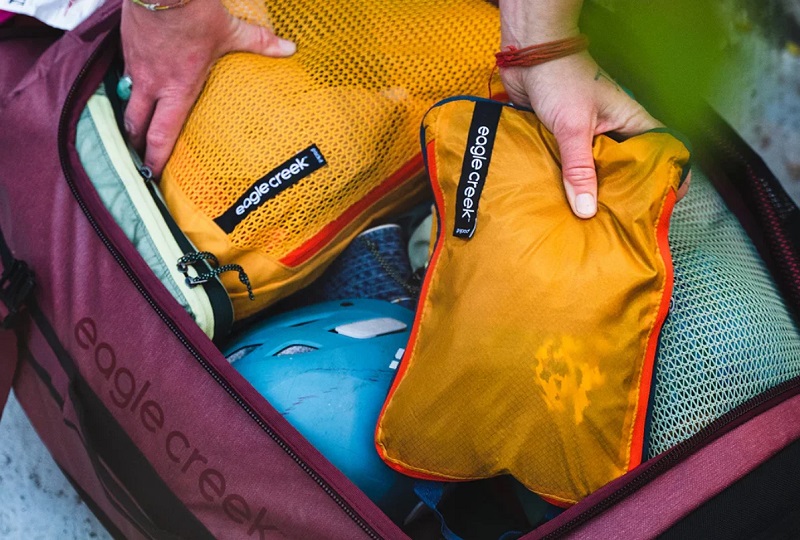
To use compression cubes effectively, it helps to understand their mechanics. A standard packing cube acts like a soft drawer: it keeps shirts separate from socks and prevents clothing from tumbling into an unruly pile. A compression cube takes that concept further by adding a secondary perimeter zipper that wraps around the outside edge. The primary zipper closes the lid, while the secondary zipper draws the top and bottom panels together, mechanically forcing out trapped air between fabric layers.
This design reduces physical volume, but it does not reduce weight. Cramming more items into a cube simply because the zipper closes can easily push your bag past strict airline weight restrictions.
Additionally, compression cubes work best on compressible, air-trapping textiles. Knitwear, synthetic base layers, merino wool, athletic gear, and fleece compress dramatically. Dense, tightly woven materials such as raw denim, canvas, and heavy cotton contain very little internal air space. Forcing those heavy fabrics into a compression cube yields minimal space savings while placing excessive tension on the stitching.
Folding vs. Rolling: Choosing the Right Packing Geometry
The conventional travel advice is to roll your clothes to save space and prevent creases. While rolling works well in standard packing cubes, it often backfires inside compression cubes.
When you roll garments into tight cylinders, they naturally cluster toward the center. As you pull the perimeter compression zipper, the sides collapse inward, but the dense rolls in the middle fight the downward pressure. The cube crowns into an elliptical dome shape. This domed profile is the primary reason luggage fails to close: the center of the suitcase bulges outward while the outer corners remain empty.
For compression cubes, a flat-fold or modified layering strategy creates far better results.
The Flat-Fold Method for Tops and Bottoms
Fold your shirts, lightweight pants, and casual sweaters into uniform rectangles that match the approximate length and width of the cube. Lay them inside one on top of the other, smoothing each layer flat with your palms as you build the stack. Because the fabric lies evenly from edge to edge, the compression zipper exerts balanced pressure across the entire surface rather than fighting a ridge in the center.
The Hybrid Fill for Irregular Items
Save rolling for small, pliable items like socks, underwear, and sleepwear. Rather than giving these pieces their own massive cube, use them to fill the perimeter troughs and corners around your flat-folded stacks. This levels out the edges and ensures the cube forms a clean, rectangular block that packs flush against the interior walls of your suitcase.
Build a Modular Wardrobe Strategy
Stuffing an entire day’s outfit into a single cube might seem convenient, but it makes compression uneven and unpacking chaotic. Different garments compress at vastly different rates. Grouping your clothing by fabric weight and structural bulk gives you much tighter control over the packed volume.
Use a medium cube for your primary tops, such as button-downs, casual tees, and light knitwear. Use a separate medium cube for bottoms, placing chinos, trousers, and shorts flat across each other. For heavy items like structured jackets or thick jeans, reconsider whether they belong in a cube at all. Wearing your bulkiest shoes and heaviest layer during transit frees up significant suitcase volume and keeps your cubes manageable.
Small cubes should be reserved for lightweight essentials. Underwear, moisture-wicking undershirts, and socks can be packed firmly without risking fabric distortion, making them ideal candidates for tight compression.
The Two-Stage Zipper Technique
Forcing a compression zipper closed while the bag is bulging is the fastest way to split teeth or ruin a seam. Closing a compression cube should always be handled in two distinct stages.
First, zip the main compartment shut. Take a moment to pat the top panel down, distributing the internal contents toward the corners to eliminate any central mound.
Second, prepare the perimeter compression track. Lay the cube completely flat on a firm surface like a table or hard floor. Place your palm or forearm in the center of the cube and press downward with your body weight to evacuate trapped air.
As you maintain that downward pressure, guide the compression zipper with your other hand. Always run your index finger along the inside track just ahead of the zipper pull. This finger acts as a shield between the zipper teeth and the internal fabric, preventing delicate knits from getting caught and shredded in the mechanism. Work your way around the corners slowly, using your palm to ease the tension on each turn rather than tugging the pull tab.
Avoid the Pitfalls That Ruin Your Clothes
Compression involves trade-offs. Knowing what to avoid will save you from spending your first night at a hotel hunting for an iron.
The primary enemy of compression is moisture. Never pack garments that are even slightly damp from laundry or humidity. Trapping moisture inside a tightly compressed nylon cube sets deep wrinkles and creates stale odors that linger throughout your journey.
Be cautious with crisp dress shirts, linen pieces, and structured tailoring. High-pressure compression presses sharp creases into natural woven fibers that are difficult to smooth out without professional pressing. If you must carry delicate items, place tissue paper between the folds to reduce friction, or pack them flat along the luggage liner outside of your compression cubes.
Finally, keep an eye on seam tension. If the stitching along the zipper looks stretched or white stress marks appear on the fabric, the cube is overfilled. Unzip the track, remove one or two items, and try again. A properly compressed cube should look like a neat, firm book with parallel panels, not an overinflated cushion.
Arranging Compressed Cubes in Your Luggage
Once your wardrobe is organized and compressed into structured slabs, packing the suitcase itself becomes a simple exercise in layout.
Start by examining the bottom of your suitcase. Most wheeled luggage features internal trolley handle rails that create recessed channels. Fill these uneven troughs first using smaller items, flat toiletry bags, or uncompressed sandals to create a level, stable foundation.
Lay your largest, densest compressed cubes flat across this base, keeping the heaviest pieces positioned near the wheels to maintain a stable center of gravity while rolling. Smaller cubes can sit on top or slide vertically into the remaining gaps along the luggage frame. Because your clothes are compressed into uniform rectangular blocks, you eliminate empty pockets of dead space and keep the entire load from shifting when your luggage is tossed into an overhead bin or car trunk.
