
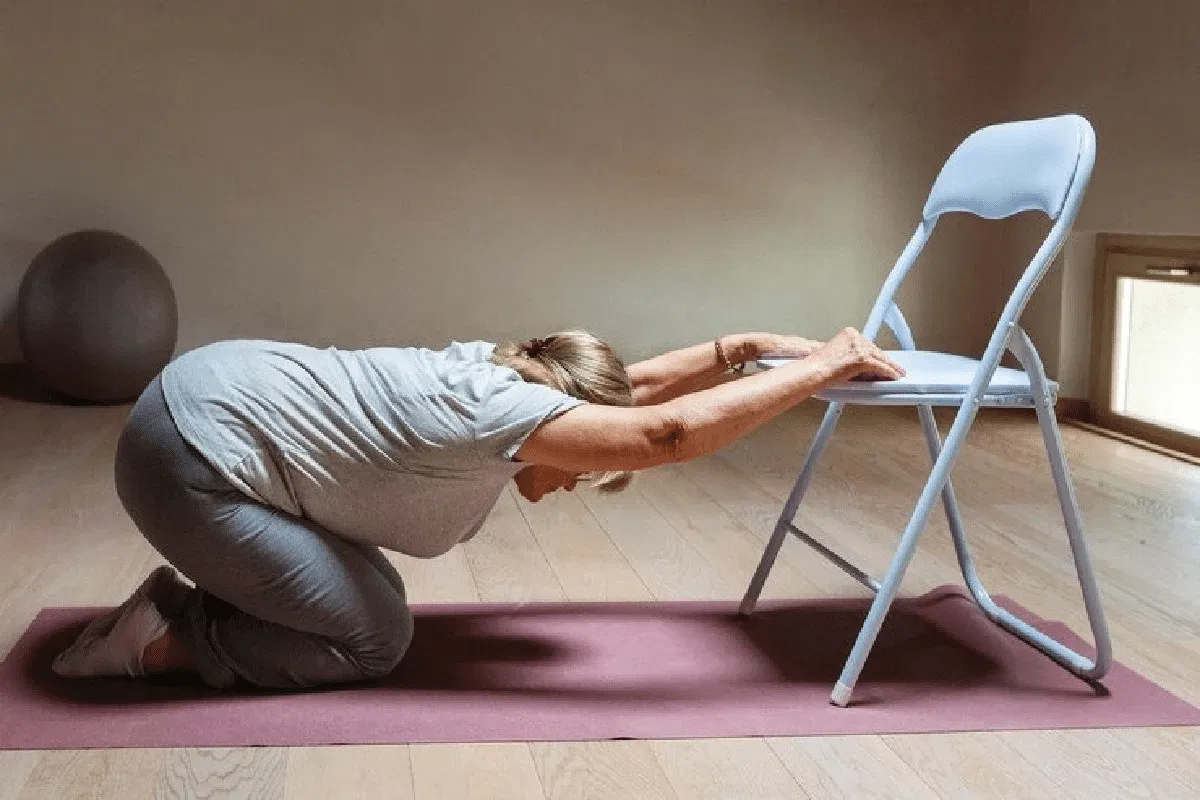
Long-distance travel compresses movement into small spaces. A passenger may sit through the journey to the airport, the flight itself and another transfer after landing. The result can be stiff ankles, a tired back and a strong desire to perform one dramatic stretch, even though gentle, repeated movement is often more practical.
Adapted chair yoga can provide a quiet way to move within the limits of an aircraft seat or terminal chair. It can help vary position and reduce the feeling of stiffness. It should not be presented as a guaranteed method of preventing blood clots, and it does not replace walking, medical advice or prescribed preventive measures for travellers at higher risk.
Plan Movement Before Boarding
Mobility during a journey begins before the aircraft doors close. If possible, choose clothing that allows comfortable ankle, knee and hip movement. Shoes should accommodate normal swelling and remain secure enough for walking through the terminal.
Pack essential medication in accordance with travel guidance and follow the prescribing clinician’s instructions across time zones. Travellers with previous blood clots, recent surgery, pregnancy, cancer treatment, clotting disorders or other relevant risk factors should discuss long-distance travel with a healthcare professional in advance.
Seat choice can affect movement opportunities. An aisle seat may make periodic walking easier, although it does not remove the need to respect service periods, turbulence and other passengers. No seat choice guarantees medical safety.
Use the Terminal as a Movement Opportunity
The departure gate often becomes another long sitting period. After check-in and security, walk at a comfortable pace rather than immediately settling at the gate for an hour. Use the restroom before boarding and refill water where permitted.
If walking is not appropriate, sit in a stable terminal chair and alternate heel and toe lifts. Gently straighten one knee, return the foot and change sides. Turn the upper body a small amount without pulling against the chair.
Avoid deep lunges, floor poses or large arm movements in crowded areas. The goal is not to stage a workout. It is to enter the flight without adding unnecessary immobility or creating a trip hazard.
In-Seat Movements That Fit a Confined Space
Heel and Toe Raises
Keep the feet beneath or slightly ahead of the knees. Lift the heels while the toes remain down, then lower them. Next, keep the heels down and lift the toes. Repeat slowly enough to feel the calf and shin muscles working.
This movement is discreet and does not require extending the legs into another passenger’s space. If the feet cannot sit flat because of luggage, relocate the bag when cabin rules allow.
Ankle Circles
Lift one foot only slightly and draw small circles through the ankle. Change direction, replace the foot and repeat on the other side. Keep the movement controlled rather than making rapid, loose rotations.
Seated Marching
Lift one knee a small distance, lower it and change sides. The pelvis can remain relatively level. A tiny movement is sufficient when the tray table, seat spacing or abdominal comfort limits range.
Pelvic Tilts
Gently tip the pelvis forwards to reduce rounding through the lower back, then tip it backwards. Let the spine respond without forcing the neck. This changes contact with the seat and can interrupt a fixed slumped position.
Shoulder and Hand Movement
Roll the shoulders slowly without lifting the elbows into neighbouring space. Open and close the hands, circle the wrists and gently turn the palms upwards and downwards. These actions can be performed while remaining within the seat boundary.
What to Avoid in the Aircraft Seat
Do not perform strong twists by pulling on the armrest or seatback. The surrounding furniture is shared and may move unexpectedly. Deep forward folds can compress the abdomen, reduce awareness of nearby passengers and feel unpleasant after a meal.
Avoid neck circles that drop the head fully backwards. Gentle turning, nodding and side inclination provide controlled alternatives. Stop any movement that produces dizziness, sharp pain, numbness or unusual breathlessness.
Turbulence changes the safety calculation. Follow crew instructions, keep the seat belt fastened when required and postpone movement that compromises a stable seated position. Cabin safety takes priority over completing a routine.
Walking Still Matters
Seated movement offers variety, but walking uses the legs and body differently. When permitted, stand and walk along the aisle occasionally. The United States Centers for Disease Control and Prevention advises travellers to stand or walk periodically and exercise the calf muscles during long trips.
Do not walk during turbulence, meal service or when the seat-belt sign requires sitting. A traveller with reduced mobility can ask the airline in advance about assistance and suitable options rather than improvising during the flight.
Hydration supports general comfort, but drinking excessive water is not a substitute for movement or medical prevention. Alcohol and sedating medicines can reduce awareness and mobility. Medication decisions should be discussed with a healthcare professional.
Reset During a Layover
A layover creates more space and more choices. Begin with a comfortable walk through the terminal. Carry luggage evenly where possible, use a trolley when appropriate and avoid turning the walk into a race to reach a step target.
Find a stable chair away from crowded boarding lanes. Sit with both feet supported, then perform a gentle hip hinge, side bend and upper-body rotation. Stand with hand support and alternate bending each knee if balance permits.
A quiet gate area can also support a short breathing pause. Keep breathing natural and avoid long breath holds. The objective is to reduce the rushed feeling of travel, not to force sleep or change the body clock instantly.
After Landing
Post-flight stiffness may tempt travellers to stretch aggressively. Begin with walking and ordinary daily movement. When space is available, add gentle calf, hip and upper-back mobility before attempting deeper ranges.
If another long car, bus or train journey follows, plan further movement stops. The body does not distinguish between immobility in an aircraft and immobility in ground transport.
Understand Blood-Clot Warning Signs
Travel-related venous thromboembolism is uncommon, but prolonged immobility can increase risk, particularly when additional risk factors are present. Seated mobility is not a medical guarantee.
Possible deep vein thrombosis symptoms include unexplained swelling, pain, tenderness, warmth or redness, commonly in one leg. Possible pulmonary embolism symptoms include sudden breathing difficulty, chest pain, coughing blood, fainting or an unusually fast or irregular heartbeat. These require urgent medical assessment.
Do not self-prescribe aspirin for travel-related clot prevention. The CDC specifically advises that aspirin is not recommended for preventing travel blood clots. People who may need compression stockings or medication should obtain individual clinical advice.
A Practical Travel Rhythm
Instead of relying on one long routine, use small opportunities throughout the journey. Move at the terminal, perform ankle and calf actions while seated, walk when permitted, and use the layover for a broader reset.
A class at Yoga Edition can help frequent travellers learn compact variations before departure. Practising them in advance is preferable to interpreting unfamiliar instructions while tired, cramped or navigating a busy airport.
The routine must remain subordinate to medical advice, cabin instructions and personal symptoms. Its purpose is to restore movement variety and comfort within realistic constraints.
Conclusion
Long flights do not require elaborate exercise to include more movement. Ankle work, small marches, pelvic tilts and shoulder movements fit within a seat, while walking and layover mobility add more complete changes of position.
The most responsible strategy separates comfort from medical prevention. Compact yoga-inspired movements can make travel feel less rigid, but individual risk factors, warning signs and professional guidance must remain part of the plan.
Frequently Asked Questions
How often should I move during a long flight?
Use regular opportunities to move the ankles and calves while seated, and walk periodically when the crew permits. Travellers with medical risk factors should follow individual clinical advice.
Can seated movements prevent deep vein thrombosis?
They can support leg movement, but they cannot guarantee prevention. Walking, individual risk assessment and clinician-recommended measures may also be necessary.
Is an aisle seat better for mobility?
It can make getting up easier, but it does not eliminate risk or replace movement. Safety rules and the needs of other passengers still apply.
Should I stretch deeply during a layover?
Usually, gentle walking and moderate mobility are more sensible after prolonged sitting. Avoid forcing range when the body is tired, cold or stiff.
Can I take aspirin before flying to prevent a clot?
Do not self-prescribe it for this purpose. CDC travel guidance states that aspirin is not recommended for preventing travel-related blood clots. Seek medical advice for your situation.
When do post-flight symptoms require urgent help?
Seek urgent assessment for unexplained one-sided leg swelling or pain, sudden breathing difficulty, chest pain, coughing blood, fainting or a very fast or irregular heartbeat.
